Long Blog #4 – Till next time:)

It’s not a goodbye. It’s a see you next time. 

Here I am, writing my final blog post for this class. It’s bittersweet. INI101H1 Blogging the Just City might have been one of the most amazing classes I’ve ever taken. Of course, that sounds exaggerated. But, it’s truly not. Learning in such an environment allowed me to learn for myself, not for a test, an exam, or for someone else. All the learning that happened was solely for myself, and I think that makes all the difference. 

Today’s post is going to be a bit different. In lieu of the circumstances our world has been placed in, many of us have been forced to return to the safety of our hometowns. Therefore, today’s post will be about Vancouver, the city I live in and am currently in right now. 

Arriving in Vancouver, I self isolated in an apartment before joining my family at our house. I didn’t see too much of the outside world, so, returning to Vancouver I didn’t notice much of a difference… yet. After two weeks of solitude, my father picked me up from the apartment to bring me back home. On our drive back, I looked outside my window and noticed something apparent along these usually busy streets. 

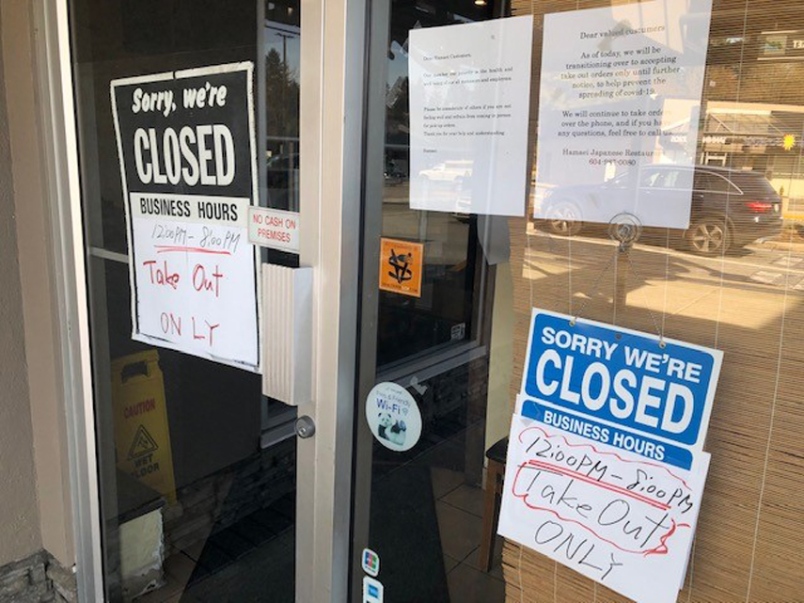
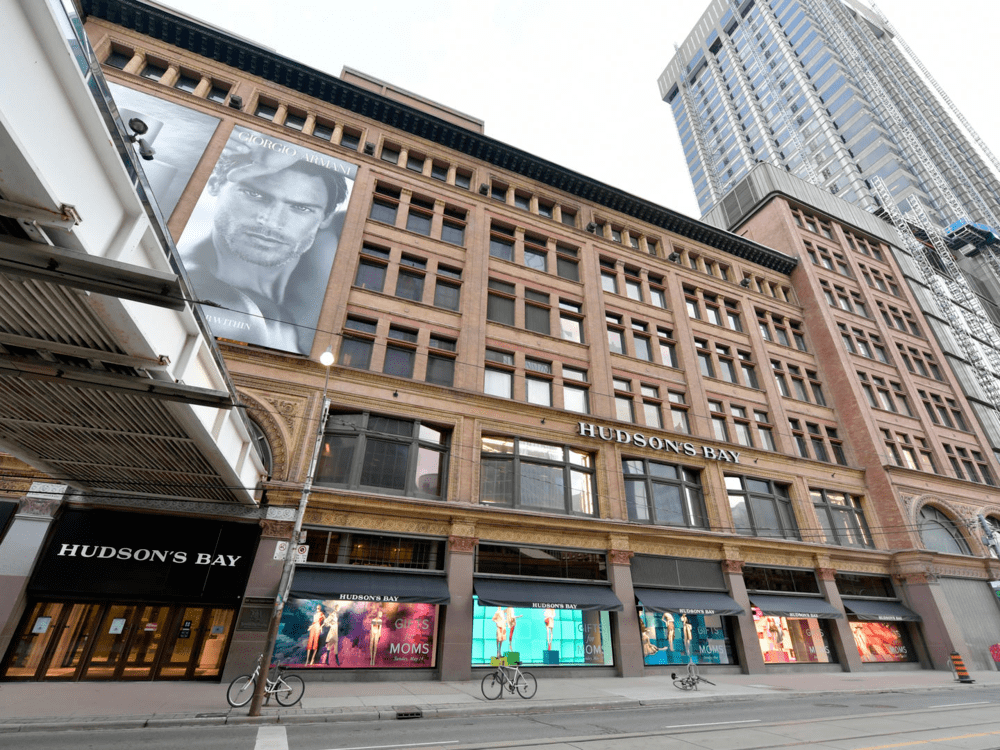
Almost everything was closed. I voiced my observations to my Dad and he replied by saying that it had started to look like this in the past couple weeks. From local shops to large retailers such as Nordstrom, Sephora, and Nike, the COVID-19 pandemic had taken a heavy toll on shops all over Vancouver (BIV)

Further, there inherently is a ripple effect to all these stores closing; people are losing their jobs too. Recently, the Retail Council of Canada issued a statement containing statistics showing that “British Columbians spend nearly $85 billion on retail annually, supporting the more than 290,000 people who are employed in that sector in this province.” It’s scary to think about what the future of BC’s economy is going to look like. 

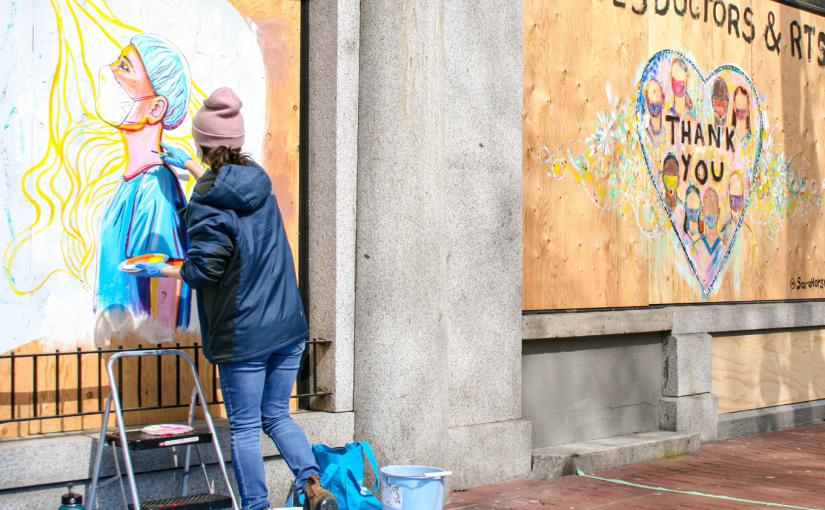
Back to driving home…numerous shops were boarded up, or had “FOR LEASE” posters plastered all over their glass windows. In my neighborhood in particular, these were local shops that were looking like they were permanently closed. It broke my heart. I had not realized how devastatingly hard COVID-19 was hitting these local shops, shops that so greatly define Vancouver and shape the character of our city. 

What’s sad is that there are so many businesses that have closed for the time being. But, there are also so many businesses that have closed for good because they aren’t able to pay for costs such as their rent without their usual steady cash flow. In fact, according to City News, “31 percent of owners think this crisis might force them to shut down permanently” and “about 22 percent who say that it will force them down the path of bankruptcy.” This is going to impact British Columbia greatly, seeing that small businesses are a substantial part of our province’s economy. 

Of course, all of this is inevitable with the virus the globe is battling right now. Rules have been implemented such as the banning of gatherings of more than 250 people (The Vancouver Sun). Rules like this are what is helping Vancouver to flatten the curve and keep our infected numbers as low as possible. Truthfully, there isn’t too much that can be done as regular citizens. But, what we can do is pay more attention to where our dollars go. Perhaps instead of ordering takeout from Mcdonalds, get your food from the local coffee shop that may be open and are maybe struggling to make ends meet. This is how we can help these local shops. 

Heritage Canada actually created this awesome interactive map that has a “list of neighbourhood businesses that are still open during the COVID-19 pandemic, with information on how these businesses are operating and how the public can support them.” Check it out here: http://heritagevancouver.org/resources/in-support-of-small-neighbourhood-businesses/

Anyway, thank you for following along with my blog. It’s been a pleasure and maybe I’ll see you again in the future! Stay safe and take care.

-Andrea:)

Short Blog # 8 – Comment on Rekha’s Long Blog 3

Awesome blog post Rekha! Until reading your blog post, I had never realized how much “artwork” or “creative designs” around the city were created not as a way to improve the aesthetic of the city, but instead, to avert homeless people from using certain public facilities. It’s sad seeing how the city had to hide their true intentions behind making artwork around the city. I think the first image you showed in your blog post was really well chosen because I never would’ve thought that that artwork on top of the vents served this purpose. Overall, great blog post. I think whoever reads this blog post will be able to exercise increased awareness when walking around the city from now on.

Check out Rekha’s blog post here: https://rekhathejuststate2020.politics.blog/2020/03/25/long-blog-3-shoved-into-the-shadows/comment-page-1/?unapproved=6&moderation-hash=d82b822a621a407bc5ddcf955a679e72#comment-6

-Andrea

LONG BLOG #3: A virus spreading just as fast as COVID-19

The Nantes ”gluers” stuck a message on a wall in downtown Nantes (France) to denounce the racist stigmatization suffered by Asian people in France since the start of the Coranovirus epidemic in China, in Nantes, France, on February 4, 2020. (Photo by Estelle Ruiz/NurPhoto via Getty Images)

The sounds of bird chirping filled my ears. The roads were silent, and the only sign of human life around me were the solo joggers running around the waterfront path. This was my first time out in days, and the warmth of the morning sun hitting my face was a feeling I so dearly missed. I found an empty bench with no one in sight, and went and sat down to enjoy the beautiful view around me. 

“2 m away from everyone” I constantly reminded myself. 

Given the emptiness of the area, this was easy. Sitting there, I let myself close my eyes and just breathe. It felt so good to be outside. Quite some time later, I heard people approaching from behind me. 

“ We can’t sit there, she’s Asian she might give us Corona” 

I turn around to see two middle aged men, staring at me. It was early morning, and I was in a complete zen state. I couldn’t be bothered to let these racist small minded men ruin my day. So, I simply walked away from them to continue on with my peaceful morning. Just a few minutes walk away, I found myself on another bench with an even better view. 

Looking back, I realize that I don’t understand at all why they had approached my area. There were tons of other benches nearby. Did they not understand social distancing? Was the point of them coming near me to say something racist “quietly” but loud enough for me to hear? But, in the moment those thoughts didn’t really hit me, and I just went on to meditate at a different bench. 

It’s upsetting to see that COVID-19 has brought upon society an influx of xenophobia. I had seen it on the news, happening in New York, San Francisco, the United Kingdom, etc. But, it never really occurred to me that I would be a victim of racism myself. 

This was the first time this had ever happened in my life. It caught me off guard, and in the moment I definitely didn’t react properly; I should’ve stood up for myself. 

Here are some more incidences of Xenophobia that have occured: 

Roger Chiang, who works in San Francisco, recalled a white woman glaring at him on the train to work, covering her nose and mouth. When he told her in a joking tone that he didn’t have the coronavirus, she replied that she “wasn’t racist — she just didn’t want to get sick.”  NPR Station article

Allison Park from Brooklyn told us that when visiting D.C., she saw a man making faces at her on the Metro train. She tried to move away from him, but he wouldn’t stop. After a while, she said, he confronted her outright, saying: “Get out of here. Go back to China. I don’t want none of your swine flu here.” A week later, on a Muni train in San Francisco, another man yelled the same thing to her — “Go back to China” — and even threatened to shoot her.” – NPR Station article

In fact, it has gotten so bad that in places such as the United States, a house resolution was  introduced to denounce the racism toward Asians that stemmed from the COVID-19 pandemic. It was sponsored by 120 other lawmakers and it stipulated that “ the House would condemn all forms of racism and scapegoating and call on public officials to denounce any anti-Asian sentiment, as well” the latter point was definitely targeted towards Trump who referred to COVID-19 as the “Chinese Virus”). 

Bizarre video of Trump: 

It’s disappointing to see that in a time of crisis where people should be supporting one another, some people are choosing to spend their time hurting innocent individualds because of their race. Coronavirus is spreading quickly, but unfortunately, xenophobia is spreading just as fast and that is not okay. 

Works Cited:

https://www.aljazeera.com/programmes/newsfeed/2020/03/trump-defends-calling-coronavirus-chinese-virus-200323102618665.html

https://www.utoronto.ca/news/show-people-u-t-expert-what-s-fueling-xenophobia-amid-coronavirus-outbreak

https://www.npr.org

https://nypost.com/2020/03/14/nyc-human-rights-commission-probing-reports-of-coronavirus-related-racism/

https://www.cnn.com/2020/03/03/uk/coronavirus-assault-student-london-scli-intl-gbr/index.html

Short Blog # 7 – A Helping Hand

Many things in life happen without warning, whether it be illnesses, accidents, or really anything. Unforseen life events are common, and many go on to hurt the futures of their victims. However, though common, many large institutions remain empathetic to those affected by situations like these. As a result of such events, people may have no credit history, or a very poor credit record. That is why Access Community Capital Fund is so great. This organization was formed approximately two decades ago in hopes to assist promising entrepreneurs who presented solid plans to action financial support. To add to that, the organization also provides consultation and mentorship resources, two services that are definitely valuable to a new entrepreneur. Individuals must undergo an application process where “ the abilities, skills and commitment of the applicant in conjunction with the strength of the business plan are key decision criteria.” This is important, because it shows how the organization is helping people, but more importantly, helping the right people. They aren’t just throwing money to whoever wants it, but actually giving it to people who will use it resourcefully and appropriately. An organization like this is beneficial to the city for a few reasons. First, it creates new businesses that potentially hold new ideas that have never been introduced to the city before. This adds to the diversity pot that is Toronto. Furthermore, it also creates new jobs in the city. Overall, this organization is great and I urge you to check it out! I’ll be linking the organization’s website below.

Until next time!

-Andrea

Access Community Capital Fund: https://401richmond.com/tenant/access-community-capital-fund/

SHORT BLOG #6 – an end cut short

COVID-19. A name everyone has become all too familiar with recently.

Classes have been cancelled as of today and people are returning to the safety of their homes to be with their loved ones. I’ll be leaving soon too, but, I just can’t seem to get this feeling of anxiety off of my chest. It feels as though the ending to this chapter in my life I call first year was just ripped out. Just like that, first year is over. It doesn’t sit right with me at all.

Looking outside, the roads are empty. Usually crowded cafes/resturants are empty. Around campus, libraries that are usually packed are empty too. Most of the cars around residence buildings are parents here to pick up their kids and help them move out. The end of first year has come all too soon. But, what’s worse (as dramatic as this sounds), it feels like its the end of the wold too.

In the past few days I’ve been forced to say my goodbyes to some of the wonderful people I’ve gotten the chance to meet in my time at university. It’s sad saying bye, especially because we shouldn’t be having to say bye this early to begin with. What’s weird is that we won’t be seeing each other for five months. That’s almost the same amount of time that we’ve been in university itself. That’s crazy to think about.

I’m still trying to fully understand what’s going on, and I think that goes for most other people too. I urge everyone to continue practicing good hygiene, and to stay alert with information from credible sources. I’ll be linking some good articles below. Stay safe everyone. See you in my next post.

-Andrea

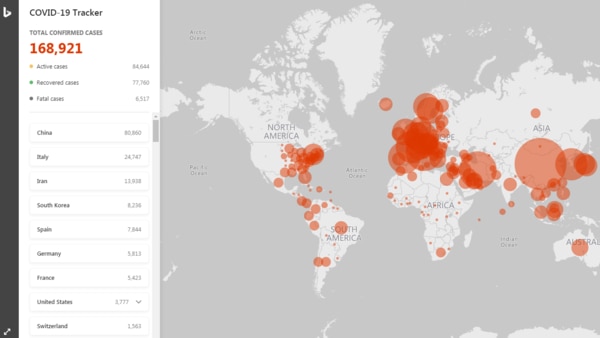
COVID-19 INTERACTIVE MAP/TRACKER: https://www.bing.com/covid

https://globalnews.ca/news/6682040/coronavirus-trudeau-address-nation/

https://toronto.ctvnews.ca/ontario-confirms-32-new-cases-of-covid-19-bringing-provincial-total-to-177-1.4854639

LONG BLOG #2 – 119 HOURS

119.31 hours. Think about all the things you could accomplish if you were given 119.31 extra hours right now… 

As of March 1, 2020, the TTC presto card fare is going up by $0.10. At first, 10 cents seems like a trivial amount. However, upon further analysis, I realized just how quickly 10 cents adds up. 

There are two typical modes of payment an adult taking the TTC would utilize: 

Option #1: Monthly Pass (Adult) 

  • Cost: $156.00 
  • Allows individual unlimited travel across the TTC system 
  • Individuals must tap their card 49 times in a month to at least make their money worth it.

Option #2: Single Ride Ticket 

  • Cost: $3.20 
  • Allows individual unlimited travel across the TTC system over a 2 hour window

Knowing these numbers, I decided to do some calculations. A monthly pass holder must use their card at least 49 times to make their money’s worth. Let’s suppose most people use the TTC twice a day (once to get to work and once to get home) for 21 working days a month, this number exceeds the amount of TTC swipes a person actually needs. It can be difficult to reach the minimum amount of swipes to make the monthly pass worth it, so most people choose to go with the latter option. So, in my blog post today I will be focussing on option #2 which is a much more commonly used option by people who take the TTC every day to and fro work. 

Once more, I did some calculations. Again, there are on average 21 working days in a month. Further, to make things a bit simpler, let’s assume everyone we are talking about today earns a minimum wage ($14.00), and pays for two TTC single ride fares per day of work ($6.40). This would mean the individual would be spending $6.40 on transportation per day, which is equivalent to them working for approximately 27.43 minutes. Given the fact that on average there are 261 work days a year, this would mean that the individual would be spending 7,159 minutes of their time working to pay for the TTC. That equates to 119.31 hours! These working class people have to spend over 119 hours only for it to be eaten by the TTC reloading machine. Poof! It’s gone just like that.

 Every minute that ticks by as we go through life goes is so valuable. When we think of the opportunity cost to work, there is so much: spending time with loved ones, taking care of oneself (mentally and physically), etc. So, the fact that that much of a person’s time working is really just spent on public transport is absolutely baffling. Of course, I do understand that the city must make money from this transport service they provide to their citizens, but, it is just so incredibly expensive. In fact, according to blogTO, an Ontario based newspaper, Toronto is the most expensive transit system in North America. This ranks it as the fifth most expensive in the world as reported by CBC News. 

So how did this problem become a subject of controversy amongst Torontonians in the first place? Why is ridership decreasing every year? And why are people always complaining about it?

As you can probably tell from this blog post thus far, it is because of how expensive fares are, as well as the frequency of the city’s decision to increase fares. 

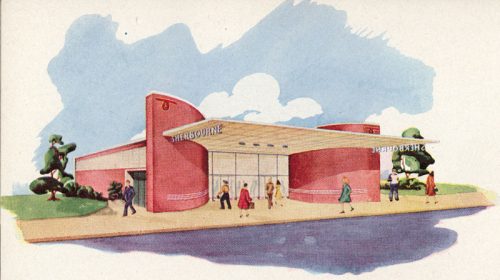
Artist’s rendition of subway station
From TTC 1921-1946
City of Toronto Archives

Of course, the TTC has been a part of our city for decades now, with the first subway station being built in the 1920s (Toronto Archives). Without this transit system, our city would not have grown nearly as much, as the construction of the TTC sparked an infrastructure boom through downtown and midtown as it was being built; these are places that are extremely significant to what we call downtown Toronto now. Therefore, we have so much to be grateful for towards the TTC. 

Remember, it’s easy to slander the TTC through online forums, and aggressive tweets, but, we must always remember that despite the increasing fares of the TTC, it has provided so much towards our city growth. This is a reminder to think about things from a positive light.

Short Blog #5 – Comment on Nicole’s Short Blog #3: “Look Deeper”

I think that the article you chose to speak about in this blog post is a very interesting one because it touches on mental health, an issue that still remains extremely prevalent today. Until recently, mental health was never an issue that was prioritized enough. Society as a whole simply found short term solutions that merely suppressed the problem, not actually working to find long term solutions to fix the whole issue. Of course, it’s easier said than done. But, that is why I wholeheartedly agree with your comment on how “we must remember to research and tackle the roots of these problems”. Thank you for this blog post, Nicole! 

I will link Nicole’s blog post down below. Be sure to check out her other posts too!

SHORT BLOG #4 – Comment on Rahul’s Long Blog #1: “This is not a good sign”

Your blog post touched on a very pressing issue which I think makes it all the more interesting to read. I really liked how you started the post: “As most Toronto residents will remember, 2016 was a memorable year for housing in the city however for all the wrong reasons.” By describing 2016 as “memorable”, I expected a positive comment to follow. However, you then continued to say it was memorable for “all the wrong reasons”. This surprised me and got me hooked. Further, you incorporated signal phrases and in-text citations, so, as a reader, I knew that the information you were telling me came from a variety of perspectives/people, thus boosting the credibility of your blog post. Thank you for this interesting blog post; I will be keeping my eye out on the housing market even more inquisitively now! 

I will link Rahul’s blog post down below. Go check it out!

SHORT BLOG #3 – Our Very Own Heart of History

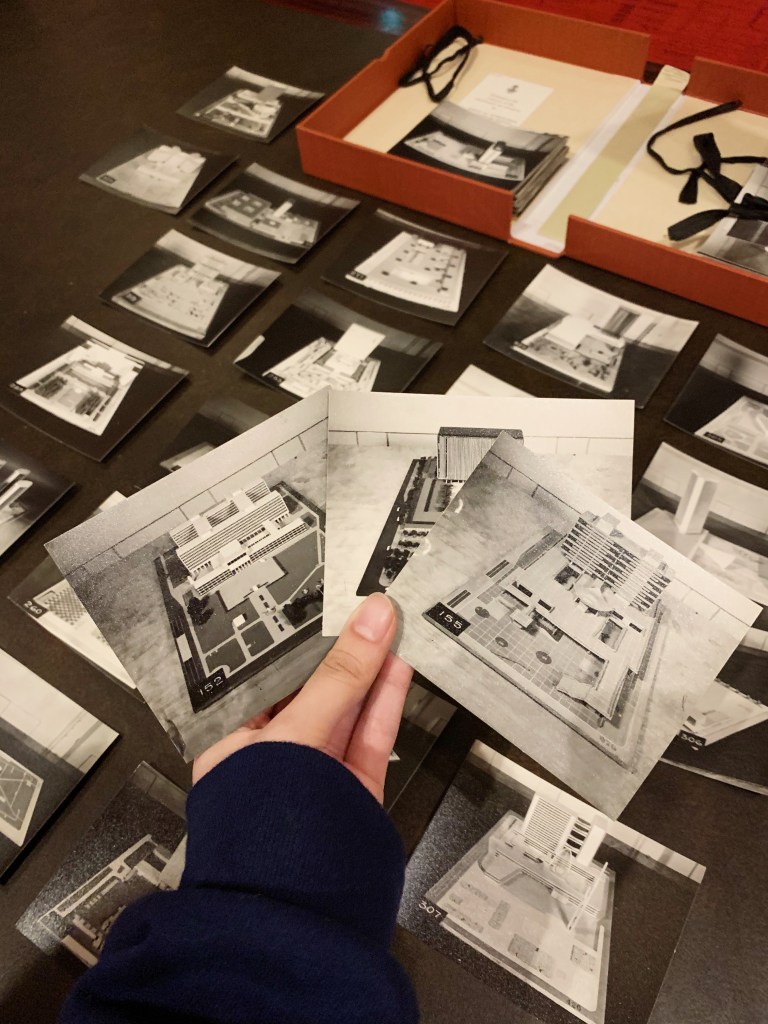
Last class we had the chance to visit the Thomas Fisher Rare book library. It was my first time in there, and it was absolutely beautiful. Entering the library, there was something about the atmosphere that felt so utterly serene, so tranquil. It amazed me that our school owned such a magnificent library, full of all these invaluable and historical artifacts/books. Moreover, the fact that it is connected to Robarts library, a library we as UofT students frequently visit, was something cool to take notice of too.

During our field trip, we received a tour from two of the library’s lovely librarians who were full of intriguing information I had never heard before. They showed us a plethora of interesting artifacts from the past, including the one pictured above. Above are images of proposed models of city hall prior to it being built. It was interesting to see the variety of designs, especially because we had just visited city hall as a class two weeks ago.

Till my next post!

-Andrea

LONG BLOG #1 – We Can Do Better

Overlooked, neglected, and ignored. Those are the exact words I would use to describe the sex trafficking issue that exists within the city of Toronto. Now, as I write this blog entry, I’m sitting in the Ryerson Student Learning Centre, surrounded by two of my closest friends. The biggest problems I’ve faced this week are walking across campus only to realize that I’ve forgotten my wallet at home, and stressing about my calculus midterm coming up. Little do I think about the real problems that are going on around me as I write, problems such as sex trafficking. Sex trafficking is a growing issue, that only becomes more prevalent as we speak. However, little is being done to shed light on this matter to the public. Why? That’s something I can’t quite comprehend either. 

The problem our society has is that there seems to be a lack of awareness towards the situation. It is overlooked because it’s been built into our brains to think that because we live in a first world country like Canada, we’re safe. We are naive, and believe that a problem like this could never happen within our very own community. We think that things like this only happen overseas, far far away from us; howwver, this couldn’t be further from the truth. Sex trafficking is a very legitimate problem we face here in Toronto. In fact, according to the International Journal of Mental Health and Addiction, trafficking for the purpose of sexual exploitation is the fastest growing crime in Toronto. It’s happening right now, and might even be taking place within a few blocks radius of where you are right now. 

Before I go any further, let me define sex trafficking. As stated on the Journal of Urban Health, sex trafficking is a “ form of human trafficking for the purpose of forced sexual exploitation” that puts the victim through means of threat, of force “or other forms of cocercion, of abduction, of fraud, of deception, of the abuse of power or of a position of vulnerability”. The facts of this issue are absolutely sickening. According to the Toronto Sun, “the average age of entry for victims is between 12 to 14 years old.” This is not fair. No one should ever have to go through such an experience, let alone a young child. Now, the scary thing is, most victims don’t even realize they’ve gotten themselves into a position where they’re subject to sex trafficking until it happens. Take Silvia’s story for example, a 14 year old girl from Toronto who shared her story on the Toronto Sun

“ A typical teenager, she spent much of her time connecting with peers on social media. Silvia would chat for hours with her friends, post pictures and make plans for the weekend. One evening, the teen was invited to a party by a friend of a friend who assured her that she would know others there. She didn’t know anyone else, but the boy who invited her was particularly friendly to the girl. After the party, they spent time together. Older than Silvia, he showered her with affection, thoughtful gifts and promises. Compelling for an impressionable young girl. Soon after having gained her confidence, Silvia’s “boyfriend” said he was worried about money and needed her help.It would only be a few weeks and then they could have a life together. Unaware, vulnerable and wanting to please, Silvia was held against her will at a hotel for over two weeks, and forced to have sex with as many men as her boyfriend could solicit.” 

Situations like Silvia’s are what make sex trafficking such a hard issue to tackle. The incidents can happen anywhere, which is what makes them so hard to track. But, we can still work towards solutions. Awareness is ultimately the most important thing we can work on as a city. Education on the topic at hand should and must be imparted to children from a young age, thereby educating those who are most vulnerable. Further, as these children grow up, they will have the knowledge to better avoid dangerous situations that eventually lead to sex trafficking. Education will also help us in terms of the public being more observant. Sex trafficking won’t go away for good; it never will. But, by being more informed citizens, we will be able to help victims by noticing the warning signs quicker. We’ll be better at recognizing the big indicators, and better at responding to these situations; “It’s OK to be wrong, but being right could truly save someone’s life” (Toronto Sun). 

Till my next post.

-Andrea

LINKS: