119.31 hours. Think about all the things you could accomplish if you were given 119.31 extra hours right now…
As of March 1, 2020, the TTC presto card fare is going up by $0.10. At first, 10 cents seems like a trivial amount. However, upon further analysis, I realized just how quickly 10 cents adds up.
There are two typical modes of payment an adult taking the TTC would utilize:
Option #1: Monthly Pass (Adult)
- Cost: $156.00
- Allows individual unlimited travel across the TTC system
- Individuals must tap their card 49 times in a month to at least make their money worth it.
Option #2: Single Ride Ticket
- Cost: $3.20
- Allows individual unlimited travel across the TTC system over a 2 hour window
Knowing these numbers, I decided to do some calculations. A monthly pass holder must use their card at least 49 times to make their money’s worth. Let’s suppose most people use the TTC twice a day (once to get to work and once to get home) for 21 working days a month, this number exceeds the amount of TTC swipes a person actually needs. It can be difficult to reach the minimum amount of swipes to make the monthly pass worth it, so most people choose to go with the latter option. So, in my blog post today I will be focussing on option #2 which is a much more commonly used option by people who take the TTC every day to and fro work.
Once more, I did some calculations. Again, there are on average 21 working days in a month. Further, to make things a bit simpler, let’s assume everyone we are talking about today earns a minimum wage ($14.00), and pays for two TTC single ride fares per day of work ($6.40). This would mean the individual would be spending $6.40 on transportation per day, which is equivalent to them working for approximately 27.43 minutes. Given the fact that on average there are 261 work days a year, this would mean that the individual would be spending 7,159 minutes of their time working to pay for the TTC. That equates to 119.31 hours! These working class people have to spend over 119 hours only for it to be eaten by the TTC reloading machine. Poof! It’s gone just like that.
Every minute that ticks by as we go through life goes is so valuable. When we think of the opportunity cost to work, there is so much: spending time with loved ones, taking care of oneself (mentally and physically), etc. So, the fact that that much of a person’s time working is really just spent on public transport is absolutely baffling. Of course, I do understand that the city must make money from this transport service they provide to their citizens, but, it is just so incredibly expensive. In fact, according to blogTO, an Ontario based newspaper, Toronto is the most expensive transit system in North America. This ranks it as the fifth most expensive in the world as reported by CBC News.
So how did this problem become a subject of controversy amongst Torontonians in the first place? Why is ridership decreasing every year? And why are people always complaining about it?
As you can probably tell from this blog post thus far, it is because of how expensive fares are, as well as the frequency of the city’s decision to increase fares.
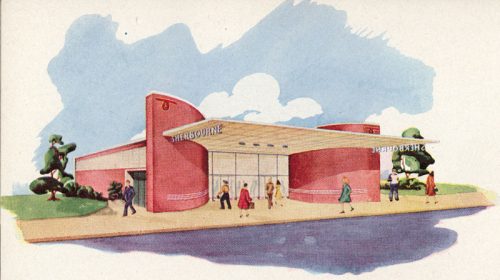
From TTC 1921-1946
City of Toronto Archives
Of course, the TTC has been a part of our city for decades now, with the first subway station being built in the 1920s (Toronto Archives). Without this transit system, our city would not have grown nearly as much, as the construction of the TTC sparked an infrastructure boom through downtown and midtown as it was being built; these are places that are extremely significant to what we call downtown Toronto now. Therefore, we have so much to be grateful for towards the TTC.
Remember, it’s easy to slander the TTC through online forums, and aggressive tweets, but, we must always remember that despite the increasing fares of the TTC, it has provided so much towards our city growth. This is a reminder to think about things from a positive light.
 BLOGGING THE JUST CITY 2020